
I've been writing PHP since I was 11, but php2shell got me to finally call it a day on WordPress.
I wanted our new site to:

- be extremely fast and friendly for both humans for bots, (we can avoid all the plugins WP needs to make a site acceptable)
- have a low attack surface (ditch the wp-login.php system) and
- integrate closely with CoreCommand (the system that manages every aspect of CoreLatency, from storing interview notes for candidates to Flash VM billing against Stripe)
Architecture
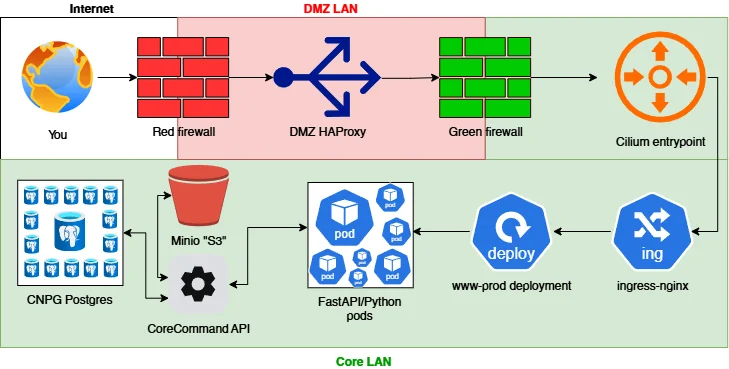
A lot goes on to serve this page to the standards of the modern Internet, in a 100% self hosted manner. We are fundamental about technology and do not want to use shortcuts like Cloudflare, managed Postgres, or website builders.
Red firewall needs to like you first
First you're going to come into our network on a gig fiber connection, and meet an enterprise firewall that will accept or reject your traffic. you're on port 443, from a non-dodgy ASN, and we're likely gonna let you in.
Load balancer, the green firewall and the entrypoint to Kubernetes
HAProxy owns the corelatency.com TLS cert from LetsEncrypt. Your traffic is now NAT'ed, ready to enter the core. HAProxy's DMZ IP wants to hit a Core kubernetes ingress-nginx controller that BGP says is available through one of the Cilium routers that live on the k8s worker VMs. The green firewall serves as a double hop before letting this traffic into the sensitive core network. You're now thru to k8s.
Let's get you onto a pod
The frontend is served by a Nuxt/Vue app, which means there's some server side compute, running on FE worker pods. They're handled by a k8s deployment that runs an image from GitLab, which the CI process built.
If you just asked for a page like llms.txt, your fun ends here. But you're a human, reading my blog, and just saw the diagram above. To do this, the frontend pods will ask our backend pods to go and fetch the pre-baked HTML that CoreCommand makes when we write a blog post - the UI in CoreCommand sends this rich text post to Minio, our self-hosted S3. It also sends other metrics about the session to Postgres for logging.
How is this so fast?
Caching. All the pods running nginx have a cache, so we don't call out to Minio each time you want to view a post.
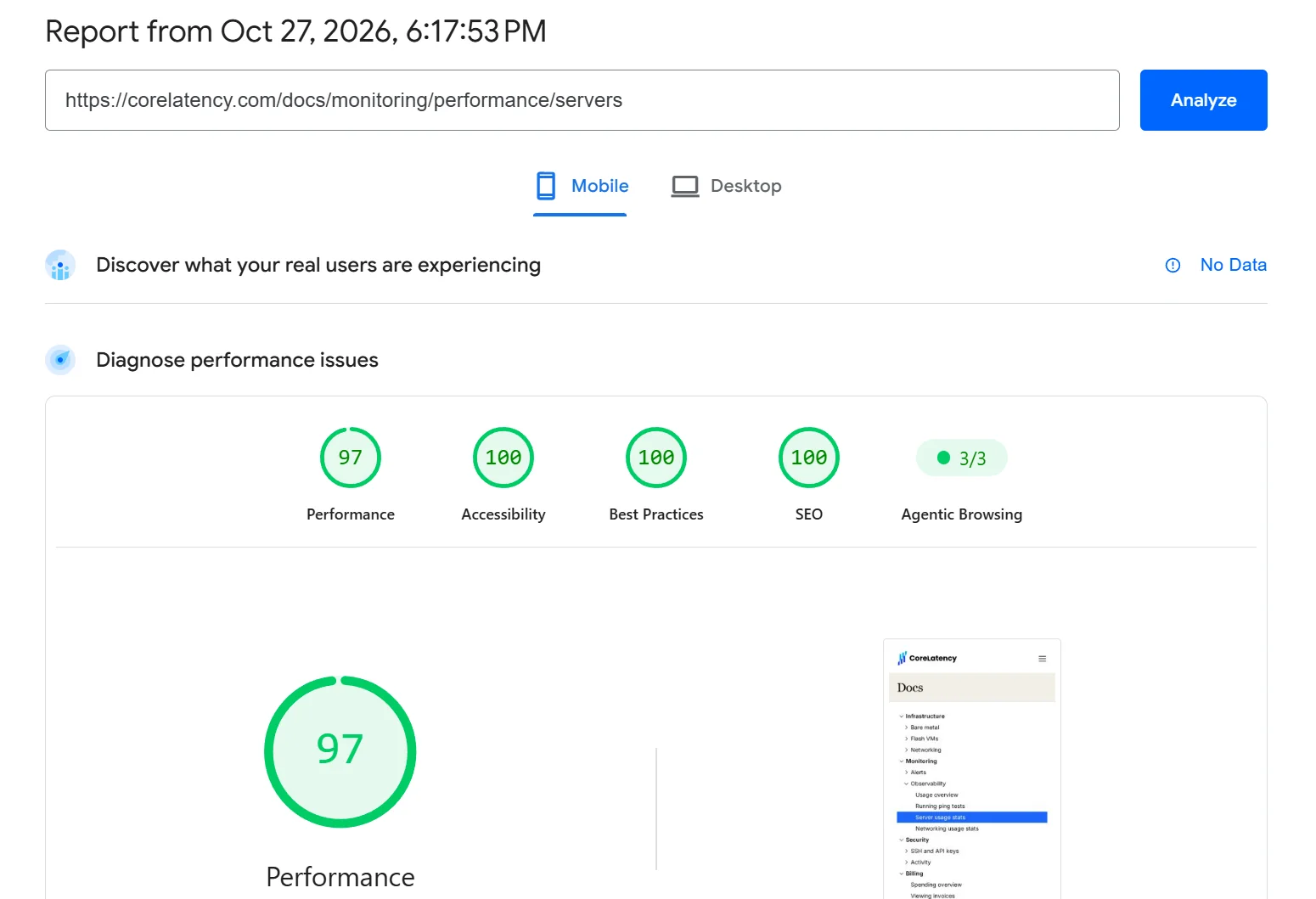
So... is it a success?
PageSpeed Insights says so:
Thanks for reading, drop me an email if you like the new blog/site! andrew@corelatency.com
PS: The last blog post had a Wojak. Here's today's jak...
caption: Proud to announce we've left 20yrs of PHP behind for modern web infra