Hi everyone, this is my first post in the Founder’s Blog, an ad hoc brain-dump with minimal filter about what’s going on in the company. It’ll serve as a log of what we’re doing in R&D, SWE, corporate stuff and interesting news.
Our 4U prototype is too big
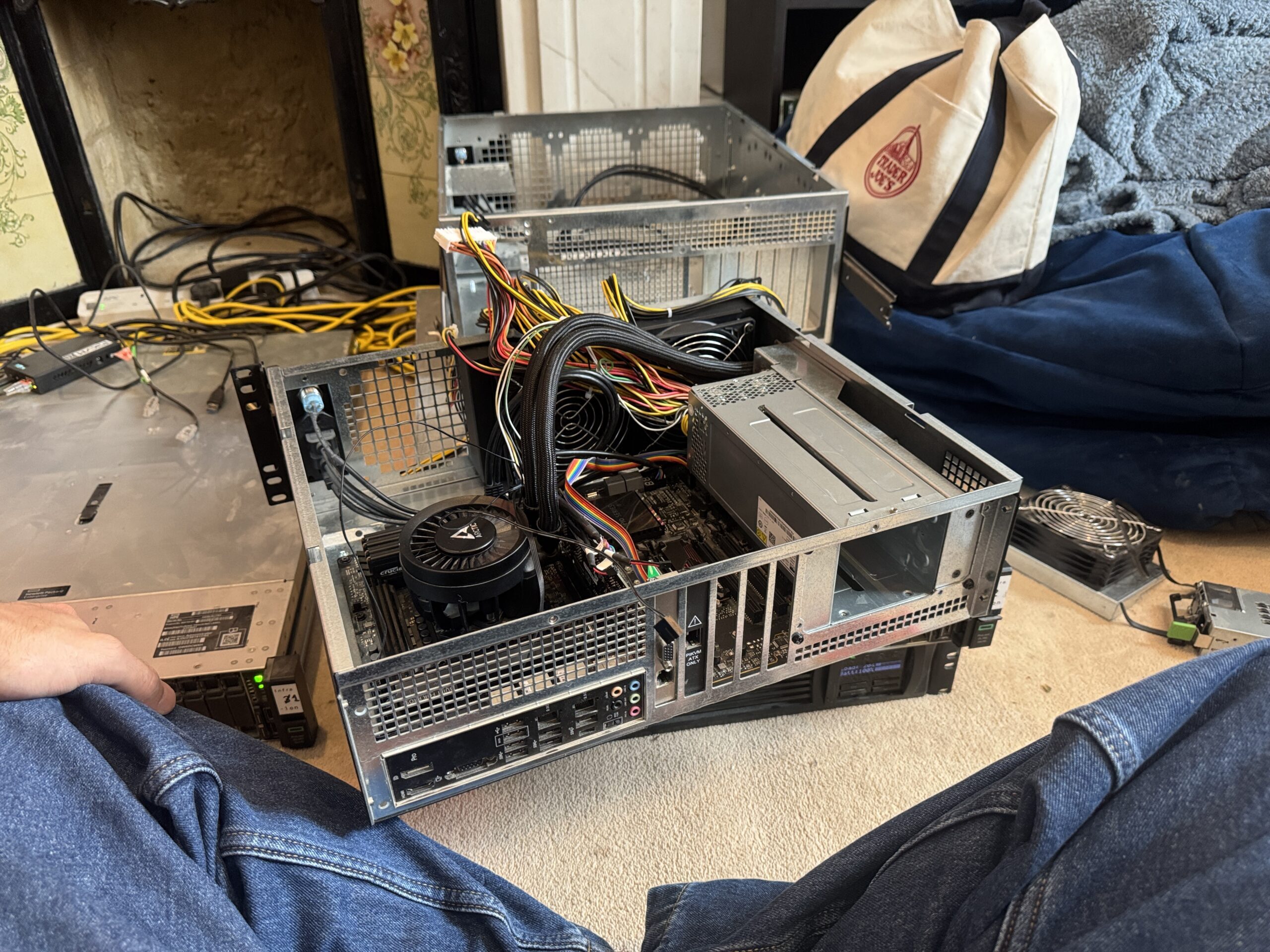
My first goal when building CoreLatency was to prove we can automate prosumer hardware at scale. This is now done and a great big fat 4U MVP was built, but Excel had other thoughts…
Problem: my operating costs model shows I would significantly improve our cash flow risk if we had ~20 servers in a cabinet. I needed to double the density of my servers and fit the same tech in half the space, without compromising cooling.
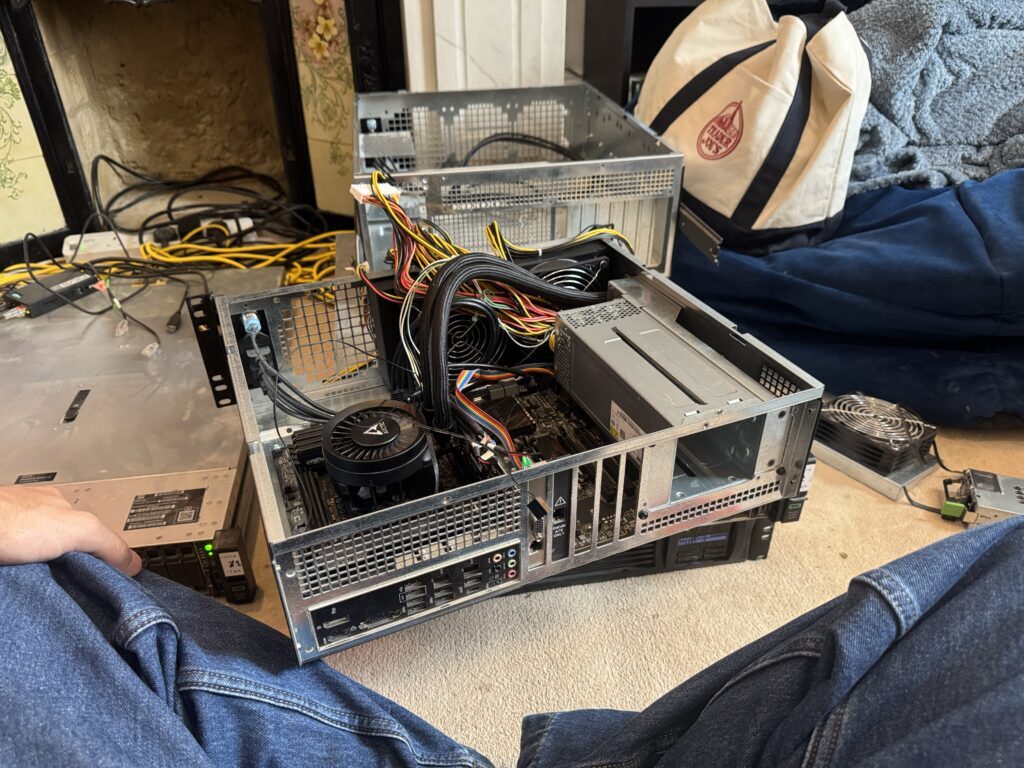
When I placed my first order with Sliger (our chassis manufacturer in the United States) I picked up a 3U box anticipating this. It was pretty hard cramming the prototype into the spare 3U box, which was barely deep enough anyways. We use redundant PSUs as well from Ac-Bel, the exact same ones you’ll find in OEMs like HPE and Dell, and they were tight to say the least getting into 3U. The water cooling as well just about fit. Lights on and we’re into 3U space:
The 2U challenge
This needs to happen, we can’t stick at 2U, because more servers in a rack with a higher provisioned power smoothes out bursty customers, so we can run more hot boxes at once.
The original water loops had 120mm high RPM fans; these won’t fit and I’m playing with quad-fan 80mm loops now. I’m speaking to the excellent guys at Sliger who are working on a new chassis for me, and I can’t wait to show you in the next post. There are some other hardware constraints we will need to miniaturise that will be much harder, relating to OOB control, remote management and how we interact with the Console.
Thoughts on GPUs
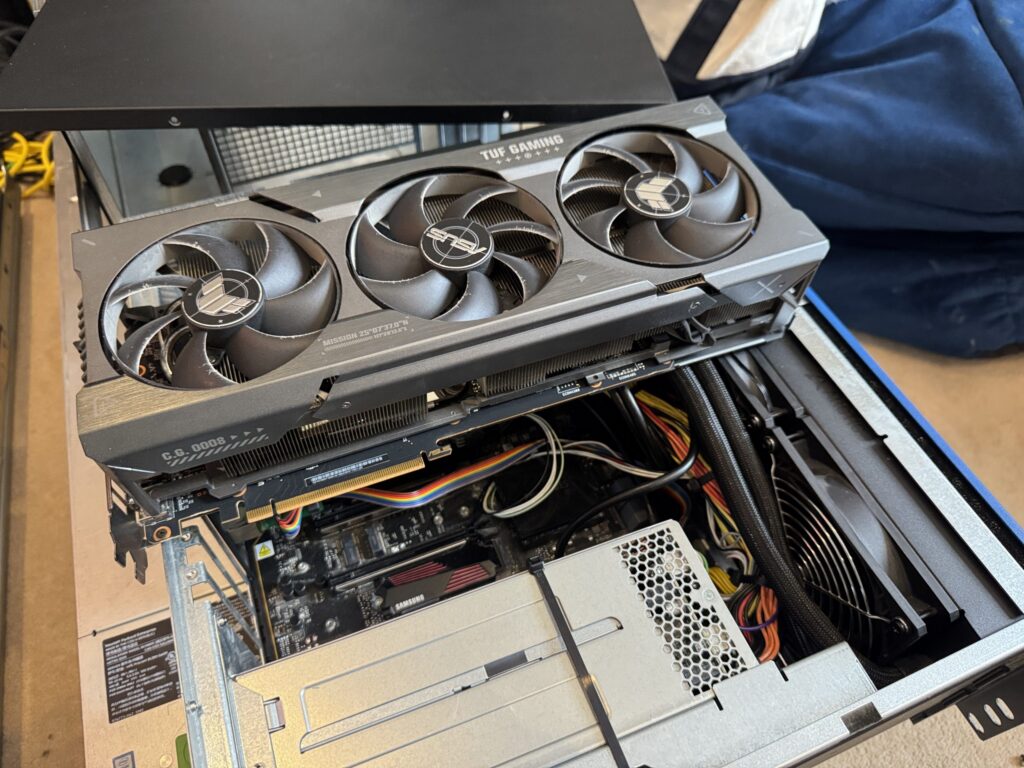
It’s clear that when we do a GPU bare metal server, we’ll probably stick with 4U initially – power constraints in the data centre are the main constraint. Getting 8 GPU nodes into a 47U rack is doable, and power draw would already push me to about 10kW, which is the higher end of what colocation facilities like provisioning anyways without moving to full water chilled racks.